The post Ustrasana for December first appeared on Maria Garre.
The post Ustrasana for December appeared first on Maria Garre.
]]>Calms excess Vata and releases stagnant Kapha
Let me guide your December asana practice. It can be challenging to decide how to practice Yoga at home. Although you’re familiar with the poses, determining the optimal sequence and timing may be uncertain. Through the support of Ayurvedic Yoga, December is the perfect month to focus on Ustrasana as it targets the two Doshas, Vata and Kapha, that we are seeking to balance.
Ustrasana, also known as the Camel pose, is a powerful backbend that stretches the entire front of the body. It opens up the chest, shoulders, and throat, releasing tension and promoting deep relaxation. The pose also brings healing to the cardiopulmonary, digestive, and nervous system.
Grounding through the femur and pelvis, activating the spine, expands the chest and throat. But as we near the Winter Solstice, the ancient teachings tell us that it’s time to dissolve all these ego-affirming, attaching activities. Come to the light of the heart and let go of all the attachments.
In addition to its physical benefits, Ustrasana has a profound impact on the energetic body. As we arch back and open our chest, we create space for emotional release and healing that is useful as we near the end of a Solar Cycle. With regular practice, Ustrasana can help us cultivate a sense of inner strength and resilience, transforming not just our physical health, but our overall well-being.
Therefore, as you enter this month of December, let us embrace Ustrasana as a powerful tool for finding balance and nourishing both our body and our spirit. Let us bring awareness to the breath, surrender to the pose, and allow ourselves to be supported by the wisdom of Ayurvedic Yoga. Together, let us embark on this journey of healing and transformation.
How to prepare the body for Ustrasana
Ustrasana requires a flexible spine, stable sacrum, and strong legs. Surrender to ease and grace.
ANATOMY >>> The focus is to strengthen your back muscles (erector spinae, posterior deltoid, trapezius, rhomboid, latissimus dorsi, hamstrings) while at the same time open through the obliques, diaphragm, pectoralis, anterior deltoid, and psoas)
TO OPEN AND STRETCH: The best way to learn how to do this for yourself is to mimic the shape and keep deepening moving in the same direction in stages, and progression.
> In simple Surya Namaskar – you can prepare when you stand and lift your arms over the head and bend back (Urdhva Hastasana), in lunge (Anjaneyasana) extend and open the front of the torso and stretch into your back thigh. In the cobra (Bhujangasana), work on strengthening the spine by lifting without the arms/hands at first to feel the muscles of extension while at the same breath relaxing and expanding toward the heart, ribs, and sternum.
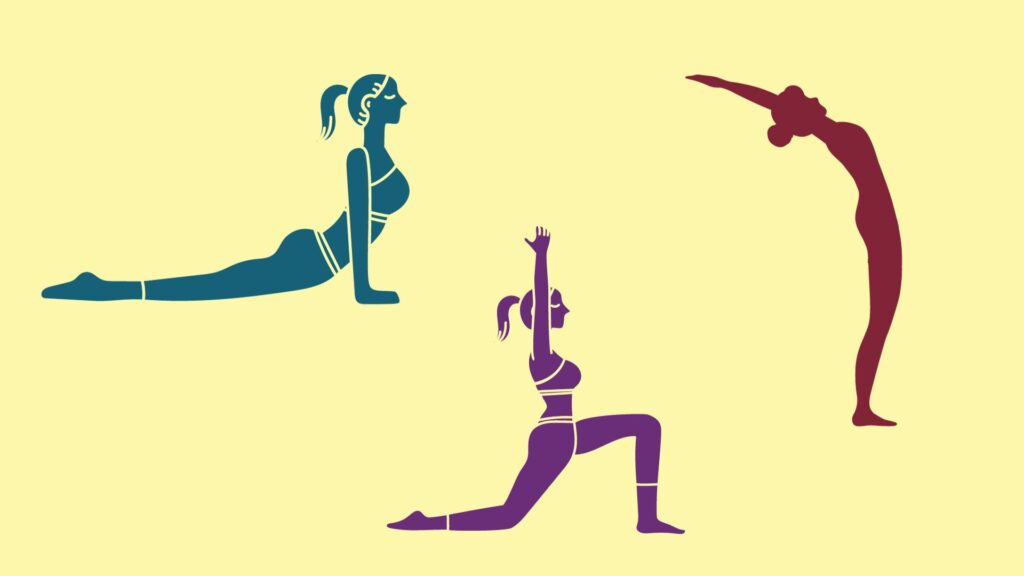
> ALSO TRY Triangle (Utthita Trikonasana) to build strength in the legs, open the side of the torso, and front of the chest and arms.
TO COUNTER: meaning to go the another direction so the body moves in both directions to maintain balance and equanimity.
> Forward bending, and flexion of the spine to release any tension or strain from focusing in one direction. (Balasana, Paschimottansana, Pawanmuktasana)
> Stay in Downward Facing Dog (Adho Mukha Svanasana) for 2 to 3 minutes. Stretch the back of the body, and let the neck and head release any excess tension. breathe evenly and enjoy being upside down and stable. Best if feet are together as a variation.
Keep it simple
I often feel Yoga to most seems complicated and difficult to figure out. Which seems silly given that Yoga is the best of simplicity. Oness. Union.
When you enjoy Yoga Asana as a practice, the goal is still the same. The method is Asana. It’s not about how long and how many but rather how present, and how unified you feel. Enjoy exploring Ustrasana as a bodily shape for inner peace.
When we can comfortably be in Ustrasana as a mudra for 1-3 minutes we are helping our ego-dissolving journey. Let’s enjoy asana as it was offered by the Himalayan masters – for self-healing, not self-attachment.
Let us remember that yoga is not about achieving the perfect pose or comparing ourselves to others. It is about embracing the journey and connecting with our true selves. As we continue to explore the depths of asana practice, may we approach it with a sense of self-compassion and gratitude, allowing it to be a transformative tool for self-healing and self-discovery.
Jai
WINTER 2024 YOGA TEACHER TRAINING SESSIONS ARE OPEN FOR ENROLLMENT
200 HR Ayurvedic Foundations ABQ
200 HR Ayurvedic Foundations Syracuse, Vyana Yoga
300 HR Ayurvedic Yoga Specialist Online + ABQ Hybrid
The post Ustrasana for December first appeared on Maria Garre.
The post Ustrasana for December appeared first on Maria Garre.
]]>The post Honoring the Guru first appeared on Maria Garre.
The post Honoring the Guru appeared first on Maria Garre.
]]>What is Guru Purnima?
It is one of the most auspicious Full Moons of the year which comes after the Summer Solstice. This full Moon is known as Guru Purnima, the moon which is dedicated to the Guru.
GURU – the one who brings wisdom to the confusion. The Guru is one that embodies light and is a steward of absolute truth.
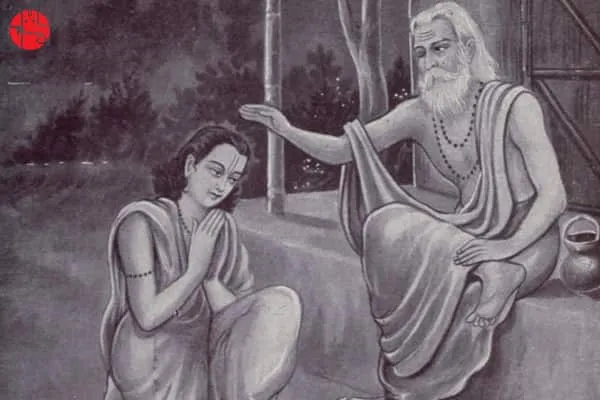
This bright full moon (one of the largest of the year) gives us the opportunity to pause and recognize the spiritual guide(s) that have brought light to our life path. The fullness of the moon in all of its splendor is a mirror to how we’ve filled our cups through the love and inspiration (inner and outer) that we receive from these guides.
In Vedic culture, honoring the Guru is a natural, common practice of showing reverence toward the teacher and the endless wisdom he/she offers. This seems to be a rarity in our modern culture. It is through their grace that we are guided toward inner wisdom, light, peace, and happiness. This day is a celebration between teacher and student.
Tradition holds that Guru Purnima is a day to offer our heartfelt gratitude to Sage Vyasa, Buddha (as on this Full Moon he delivered his first teaching at Sarnath), or Lord Shiva (the first teacher of Yoga). First and foremost on this day, we recognize a connection to an enlightened being that we have not met but are connected through their teaching/philosophy. For many practitioners of Yoga, it may be a connection to Patanjali, Vasistha, the Krishna of the Bhagavad Gita etc.
The next important Guru, are our parents for they serve as our first teachers, guides, and mentors. It’s a way of honoring our elders and their stewardship to support the next generations. We then also come to recognize a powerful teacher(s) that brought you closer to your inner light.
Guru Purnima is not about putting humans on a pedestal to worship and admire. For me, it’s a recognition of lineage. To what and to whom do I bow down in gratitude? The answer can evolve for you over time. And it is nice to check in yearly and connect to your spiritual path. This modern Guru brings a potent connection to Spirit. They help you get out of your way, and serve as a mirror to reflect back. They likely “push your buttons” and expand your Being like none other.
Think of this day as “Teacher’s Day” in the most blessed way. We don’t give the teacher a present per se but rather honor them through prayer, mantra, or simply spending time with them.
From sunrise to moonset on this day you bow, honor, and meditate to the spiritual teacher(s) that have illuminated your path. Today is also a day to recognize the Self as the greatest teacher of all. The Guru will ultimately bring you to the realization that we are all One and thus no separation exists. Thus, G(ee) U(you)R(are)U .. G U R U
WAYS TO CELEBRATE GURU PURNIMA
- Sit under the light of the Full Moon and chant the Mantra given to you by your guru. Or choose a mantra you resonate with deep into your heart.
- If you have an altar then clean that area, offer fresh flowers, and light a ghee lamp or candle in celebration.
- Spend time with those that have illuminated your heart.
- Spend time reading sacred Vedic texts such as: Upanishad, Bhagavad Gita or any other texts by Buddha etc.
- Chant the following mantra:
GURU MANTRA
Guru Brahma, Guru Vishnu, Guru Devo Maheshvaraha
Guru Śaksat, Para Brahma
Tasmai Shri Gurave Namaha
The post Honoring the Guru first appeared on Maria Garre.
The post Honoring the Guru appeared first on Maria Garre.
]]>The post What is Ayurvedic Yoga? first appeared on Maria Garre.
The post What is Ayurvedic Yoga? appeared first on Maria Garre.
]]>
“This is the first class I have taken like this. Is it hard? Is it advanced?”
“What do we do in this class, exactly?”
I congratulate them on venturing and exploring the unknown. And tell them all will be OK.
Once we are all settled, I begin with a very brief description to ease the mind and calm the body. So, what is Ayurvedic Yoga anyway?
Maybe you have some understanding of what Yoga is and perhaps Ayurveda, but for most Ayurveda is a new term. Simply put, Ayurveda is the oldest system of medicine, and Yoga is a system of philosophy for mind and spirit. The two come together to offer you a therapeutic approach to Yoga. Ayurveda helps me decide what to teach and sequence for overall group wellness and Yoga gives me the practices to put together. Each class has a traditional lineage of Hatha Yoga offering pranayama, asana, and meditation guided by the principles of Ayurveda.
So that’s the short version.
The juicy history is that this is the way Yoga was intended all along. Adaptations and transformations have broken all the systems that were ONE into many. The perception is that they are all separate when true healing requires the entire book of wisdom (Rig Veda) not just parts of it.
Ayurveda and Yoga are disciplines rooted in the ancient Vedic culture of India, which is more than 5,000 years old. These two branches of Vedic knowledge come from a vast body of ancient wisdom first transmitted orally by the Rishis (seers or sages). Later it was written and documented into a collective of texts known as Vedas, the Rig Veda being the main one.
The Rishis were well-versed in Yoga, Ayurveda, Jyotish (Vedic astrology), and Vatsu Shastra (the science of architecture), all of which form part of a comprehensive and interconnected system of wellness, healing, and longevity. These systems were first documented in the Sanskrit language through the Rig Veda and the remaining three Vedas: Atharva, Sama, and Yajur. Collectively the “Vedas” are the foundation for all wisdom that is needed.

Ayurveda and Yoga are sister sciences, intimately connected in philosophy and application, essentially representing one side of the same coin. Both their philosophy and application are from the same source. Ayurveda teaches the art of living in harmony with nature by suggesting proper diet, lifestyle, and herbal protocols while also offering strong curative therapies. Yoga, in its various lineages, serves to unify or bring us back to our true Self, Being. Yogic practices are about balancing, restoring, and activating energy pathways to guide the mind toward stillness, and peace. Basically, if you don’t feel well, it’s hard to complete Yoga practices. So at the simplest level, Ayurveda keeps us healthy and strong enough to deepen our Yoga practice.
The individualization part was lost in translation as we moved these sciences West..Students perhaps gathered for discourse etc but practices and health care routines were always individualized. It was a common understanding that each person needed a unique way toward health and well-being. There wasn’t a formula to apply to all. The movement West created this model. And that helped the spread of these practices. They became more “universal” to serve many at once.
For me, Ayurvedic Yoga offers a way to teach a group class connected to these Vedic roots to offer a therapeutic approach to sequencing and focus. For individual therapy and lifestyle consultation, the integration puts all the pieces together for radiant longevity and well-being. Welcome to what always was and will be the path of ONE.
WANT TO LEARN MORE?
The post What is Ayurvedic Yoga? first appeared on Maria Garre.
The post What is Ayurvedic Yoga? appeared first on Maria Garre.
]]>